Have you ever stumbled upon a word starting with “bel” and wondered why so many words share this little root?
Maybe you were texting a friend, reading a book, or scrolling through social media and saw words like beloved, bellicose, or belittle, and it left you scratching your head.
Don’t worry — you’re not alone. Understanding the root “bel” can unlock the meaning of many words in English and help you use them correctly in writing or conversation.
In this article, we’ll break it down, give examples, and show you where and when to use words with this root.
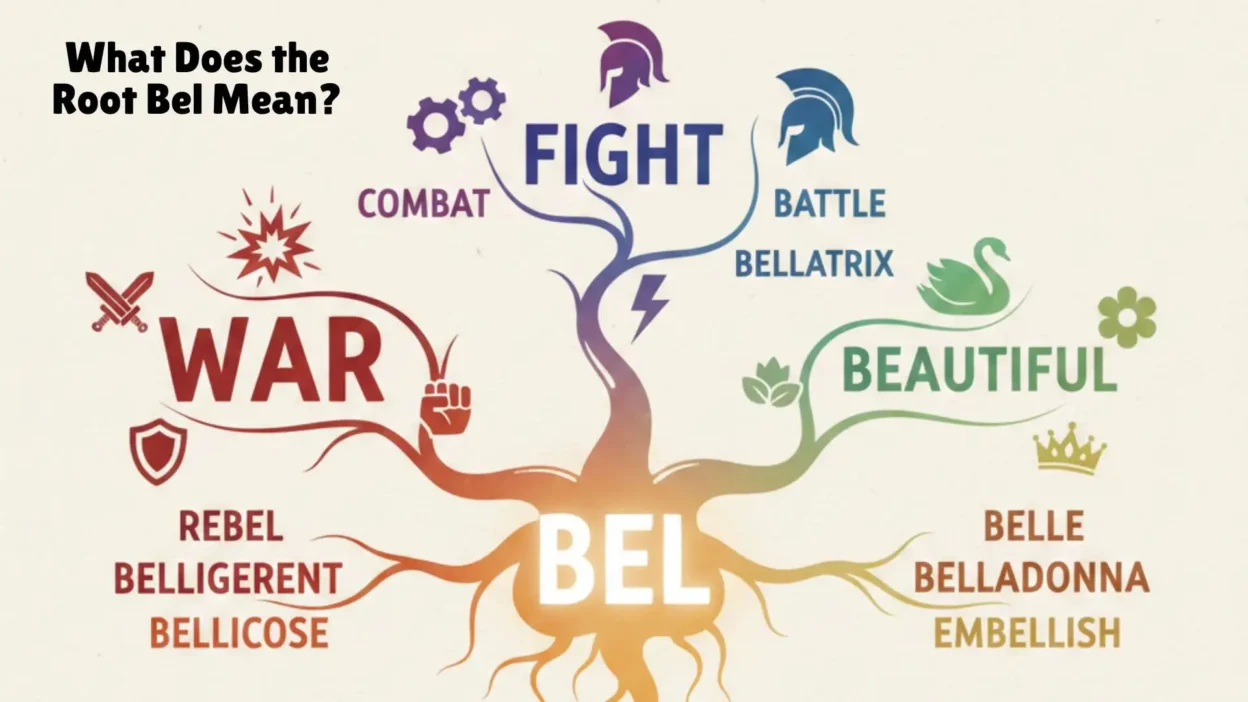
Quick Answer: The root “bel” means “war” or “beautiful,” depending on the word. It’s a friendly and educational way to understand and predict word meanings.
What Does the Root Bel Mean in Text?
The root “bel” originates from Latin. In some words, like belligerent, it relates to war or fighting (bellum means war in Latin). In others, like beautiful or beloved, it comes from beauty or desirability. Recognizing this root can help you guess meanings even if you’ve never seen the word before.
Example sentence:
- “She’s a beloved teacher who inspires everyone.”
In short: bel = war/beautiful = fighting-related or beauty-related meaning depending on the word.
Where Is the Root Bel Commonly Used?
Words with “bel” appear in various contexts. Here’s where you’re likely to see them:
- 📱 Texting & Messaging: beloved, belittle (friendly, casual)
- 🎬 Social Media & TikTok: Words like beloved, rebellion for storytelling
- 📚 Formal Writing: belligerent, bellicose in essays, news articles
- 🎮 Gaming Chats: belligerent for describing aggressive behavior
Tone: Mostly casual or social-media-friendly, but some words (like belligerent) are formal or serious.
Examples of the Root Bel in Conversation
Here are some realistic chat examples showing “bel” words in context:
- A: “I just finished my painting 😍”
B: “Wow, it’s beloved by everyone!” - A: “He keeps picking fights online 😅”
B: “Yeah, he’s kinda belligerent sometimes.” - A: “Did you see her post?”
B: “Yes, she looks so beautiful 🌸” - A: “He made fun of my idea…”
B: “Don’t let him belittle you.” - A: “Our team’s ready for the match 💪”
B: “Let’s show them our bellicose spirit!” - A: “She’s always so sweet ❤️”
B: “Totally beloved by everyone.”
When to Use and When Not to Use Words with Bel
✅ When to Use
- Friendly texts or compliments
- Describing someone’s beauty or charm
- Talking about conflicts or aggression in discussions
- Social media captions or storytelling
❌ When Not to Use
- Formal work emails (unless professional context)
- Urgent or serious warnings (avoid casual words like beloved)
- Academic writing without proper context
Comparison Table
| Context | Example Phrase | Why It Works |
| Friend Chat | “No rush, take your time 😄” | Casual & friendly |
| Work Chat | “He seems belligerent today” | Polite & professional |
| “Please review the document carefully” | Formal & clear |
Similar Slang Words or Alternatives
| Slang | Meaning | When to Use |
| Beloved | Loved, admired | Friend chats, social media |
| Belligerent | Aggressive, warlike | Work discussions, news articles |
| Belittle | Make someone feel small | Casual advice, caution |
| Beautiful | Attractive, pleasing | Compliments, texting, captions |
| Rebellion | Resistance, defiance | Social media storytelling |
FAQs About the Root Bel
Q1: Does “bel” always mean war?
No. In some words, it relates to war (belligerent), while in others it relates to beauty (beloved).
Q2: Can I use “bel” words in casual texts?
Yes, many words like beloved or beautiful are perfect for casual chats or social media.
Q3: Are all “bel” words positive?
Not always. Some words like bellicose or belligerent are aggressive, so context matters.
Q4: How can knowing the root help me?
Understanding bel can help you guess meanings and use words confidently in conversations or writing.
conclusion
Understanding the root bel makes English vocabulary less intimidating. Whether it’s expressing love with beloved, warning about aggression with belligerent, or complimenting someone’s looks with beautiful, knowing this tiny root gives big advantages in communication. Keep an eye out for it, and you’ll start spotting patterns in words everywhere.