
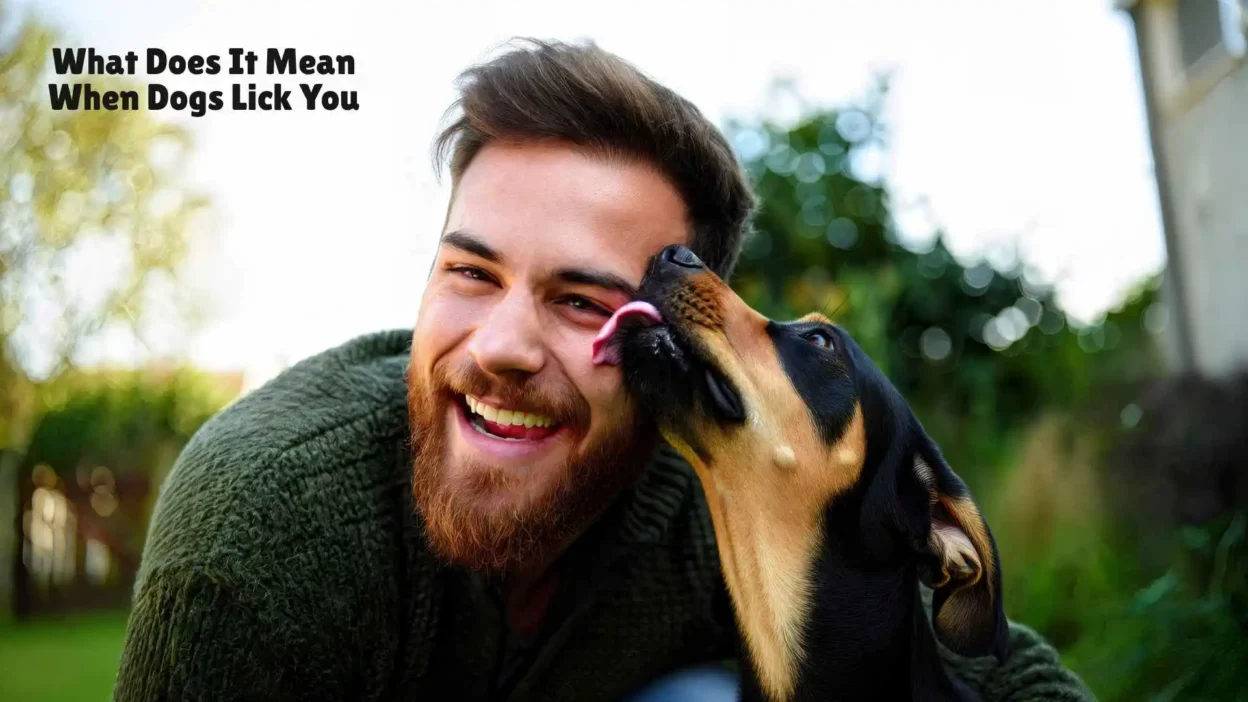
Dog owners see it every day. You sit down for a moment and suddenly you feel a warm tongue on your hand or your face.
It can feel sweet or confusing or sometimes a little overwhelming. Many people wonder what this behavior really means and how to tell the difference between dog affection, instinct, and signs of stress or anxiety in dogs.
This in-depth guide breaks down why dogs lick humans, the science behind it, the emotional triggers hidden inside this habit, and how to manage excessive licking, problematic licking, and unwanted licking.
You’ll find evidence-based explanations, helpful tables, and practical training steps based on real canine behavior, not myths.
What Dog Licking Really Means | A Quick Overview
Licking is one of the core parts of dog communication. Dogs lick humans for many reasons. Sometimes they want attention. Sometimes they’re acting on instinct. Sometimes they’re exploring taste or responding to emotional stress. Each lick has a reason behind it and your dog’s body language gives you the clues.
Here’s a quick snapshot:
| Dog Licking Behavior | Likely Meaning | Notes |
| Licking your face | Affection or greeting | Also linked to instinctual pack behavior |
| Licking hands | Taste exploration, comfort seeking | Sweat, oils, scents attract dogs |
| Licking feet | High salt levels | Can also be calming or habitual |
| Excessive licking | Stress, anxiety, compulsive behavior | Seek professional support if persistent |
| Licking wounds | Grooming instinct | Not safe due to bacteria risks |
| Clingy licking | Attention-seeking | Reinforced by your reactions |
Now let’s take a deeper look at each part of this behavior.
Understanding the Instinct Behind Dog Licking
Dogs didn’t invent licking today. This behavior comes from thousands of years of evolution and deep-rooted wild instincts. Licking is tied to both physical survival and emotional bonding which is why it still appears in modern dogs and why it often feels natural to them.
Maternal Licking Sets the Stage
Right after birth a mother dog begins licking her puppies. This early behavior:
- Stimulates breathing
- Helps with digestion
- Cleans the pups
- Creates bonding
- Offers warmth and comfort
Because puppies experience licking as security and safety they grow up seeing it as a social tool.
Wolf Pack Instincts Still Drive Modern Dogs
In wolf packs pups lick the faces of adult wolves as a signal that they are hungry. This action can trigger the adult to regurgitate food. While domestic dogs don’t rely on this anymore the instinct remains. That’s why so many dogs naturally aim for your face when they lick you.
Social Hierarchy and Respect Signals
Among dogs licking can also show submission or acceptance. When your dog licks you especially when you walk into a room it may signal:
- “I respect you.”
- “I’m glad you’re back.”
- “You’re part of my pack.”
This makes dog licking one of the oldest canine social behaviors.
Why Dogs Lick You | The Real Reasons Behind Every Slobbery Kiss
Dogs don’t lick humans for just one reason. They use it for bonding, communication, and sometimes emotional release.
Affection and Bonding
This is what most people think of when they hear dog kisses. Dogs lick to strengthen their bond with their humans. Licking can release dopamine and oxytocin in both the dog and the human which deepens the connection.
Common signs it’s affection:
- Loose body language
- Wagging tail
- Soft eyes
- Calm posture
- Happens during relaxed moments
Dogs don’t rely on words they rely on actions. Licking is one of the simplest ways they can show love.
Attention Seeking Behavior
If your dog notices that licking gets a reaction from you even a small one it can snowball into a habit. Dogs quickly learn patterns and if licking earns attention they’ll repeat it.
Reactions that reinforce licking include:
- Laughing
- Talking
- Pushing the dog away
- Picking the dog up
- Making eye contact
Dogs don’t label attention as negative or positive. All attention counts which is why ignoring is one of the strongest ways to reduce attention-seeking behavior.
Taste Exploration
Dogs explore the world with their noses and tongues. Human skin often tastes:
- Salty
- Oily
- Slightly sweet
- Scented from lotion or soaps
This sensory curiosity explains why some dogs love licking hands and arms especially after you’ve cooked food or been outside.
It’s not emotional it’s simply exploration.
Stress, Anxiety and Compulsive Behavior
This is where licking becomes concerning. Licking can be a coping mechanism when dogs feel overwhelmed. Signs of stress-induced licking include:
- Repetitive licking
- Licking objects or surfaces
- Licking when left alone
- Licking during loud noises
- Licking when new guests arrive
In more serious cases dogs develop compulsive licking similar to OCD in dogs. This behavior continues even without a clear trigger and often requires help from a veterinarian, veterinary behaviorist, or animal behaviorist.
If your dog’s licking feels constant or uncontrollable they may benefit from:
- Behavior modification
- Environmental enrichment
- Medication for dog anxiety
- Professional evaluation
Learned and Reinforced Behavior
Dogs repeat what produces results. If licking once earned a treat affection or your attention it becomes valuable in their mind. Dogs are fast learners and reinforcement shapes behavior faster than many owners expect.
Grooming Behavior
Dogs groom each other by licking. If your dog licks your hands or arms they may simply be treating you like part of their social group.
This grooming behavior can appear when:
- You’re cuddling
- You’ve just come home
- Your dog feels relaxed
- You’re sitting calmly
It’s a sign of closeness.
What It Means When Your Dog Licks Different Parts of Your Body
Where your dog licks you can help you figure out the meaning behind the behavior.
Face Licking
Face licking is often connected to affection and pack behavior. It may signal joy, greeting, or recognition.
However face licking carries higher hygiene risks because of bacteria in dog saliva and should be limited especially around the nose eyes and mouth.
Hand and Arm Licking
Hands carry scents and tastes from everything you touch. Dogs also recognize your unique scent through your hands so licking them often means:
- Comfort
- Curiosity
- Sensory exploration
If your dog licks your hands more than any other spot they may feel especially bonded to you.
Feet Licking
Feet are salty which makes them appealing to many dogs. They also provide a strong familiar scent which can soothe anxious dogs.
Feet licking usually indicates:
- Stress relief
- Habit
- Taste attraction
If it becomes obsessive it may connect to anxiety in dogs.
Ear Licking
Dogs may lick your ears because:
- They smell interesting
- They’re sensitive spots
- They mimic grooming behavior
It’s affectionate but hygiene can be an issue.
Normal Licking vs Problem Licking | How to Tell the Difference
Not all licking is harmful. The key is knowing when it crosses the line into concern.
Signs of Normal Licking
- Happens occasionally
- Appears during bonding moments
- Stops easily
- Does not disturb daily life
- Dog remains calm and responsive
Warning Signs of Problematic Licking
Licking becomes a red flag when:
- Your dog licks constantly
- They lick instead of resting
- They become restless or anxious
- They lick objects compulsively
- Their skin becomes irritated or raw
- They lick as soon as you stop them
Sudden increases can signal:
- Allergies
- Stress
- Pain
- GI discomfort
- Frustration
- Lack of stimulation
Heavy or sudden changes should be checked by a professional.
Health and Hygiene Risks of Dog Licking
Dog saliva contains bacteria that can cause infections when it enters open wounds or sensitive areas.
Common risks include:
- Skin infections
- Increased chance of bacteria entering cuts or scratches
- Irritation from saliva enzymes
Dog bite bacteria can also spread through saliva even when a dog isn’t biting.
When You Should Not Let Your Dog Lick You
- If you have open wounds
- If you have eczema or skin issues
- If your dog has dental disease
- If your dog has an active infection
- If you have a weakened immune system
While many dogs are healthy it’s better to avoid unnecessary exposure.
How to Stop a Dog From Licking Too Much
When licking becomes unwanted you can reduce it through training and behavior management. Dogs aren’t being bad they simply need guidance.
Ignore and Withdraw Technique
Dogs lick because it gets attention. Removing attention breaks the cycle.
How to use it:
- Turn away when your dog licks
- Avoid eye contact
- Stay calm
- Wait for the dog to stop
- Reward calm behavior
Dogs quickly learn that licking does not earn interaction.
Redirect the Behavior
Give your dog an alternative when they try to lick.
Useful redirections:
- Chew toys
- Enrichment toys
- Food puzzle toys
- Tug toys
- Bones
- Busy feeding mats
This keeps their mind busy and reduces stress.
Increase Physical and Mental Exercise
A tired mind licks less.
Your dog may need:
- Longer walks
- Fetch
- Tug games
- Training sessions
- Puzzle feeders
- New toys
Enrichment reduces boredom which often fuels excessive licking.
Teach Clear Boundaries
Dogs respond well to structure.
Helpful strategies:
- Use a “no lick” cue
- Keep practices consistent for all family members
- Use a gate when guests visit
- Ask for a “sit” or “place” cue around visitors
- Reward calm behavior
Boundaries reduce anxiety and support healthy manners.
When to Seek Professional Help
If your dog shows signs of compulsive licking or anxiety you may need help from a:
- Veterinarian
- Veterinary behaviorist
- Animal behaviorist
Professional treatment may include:
- Behavior modification
- Structured training
- Environmental changes
- Medication for dog anxiety or compulsive behavior
You’re not failing as an owner. You’re giving your dog relief.
Expert Insights That Help You Understand Dog Licking Better
Veterinary experts explain that licking isn’t always affection. Sometimes it’s stress or a learned habit. Key points to remember:
- Context matters
- Body language reveals meaning
- Excessive licking signals emotional distress
- Early training prevents behavior escalation
- Licking doesn’t mean dominance
- Calm behavior should always be rewarded
Understanding licking helps you support your dog’s emotional health.
FAQs About Dog Licking
Does licking mean my dog loves me?
Often yes. Dog affection is one of the most common reasons dogs lick humans. But it can also be attention-seeking or stress-related.
Is it OK to let my dog lick my face?
It’s not recommended due to bacteria risks though many owners still allow it. Avoid it if you have open skin.
How do I stop my dog from licking others?
Use boundaries training redirecting behavior and rewarding calm behavior.
Why does my dog lick me so much?
Possible reasons include affection anxiety attention-seeking or taste exploration.
Why does my dog lick at night?
Nighttime licking may connect to anxiety boredom habit or emotional comfort.
Why does my dog lick my wounds?
Instinct. However it can cause infection so always prevent it.
Conclusion
Dogs lick for many different reasons. Sometimes it’s love sometimes it’s instinct and sometimes it’s a sign of stress tucked beneath the surface. When you understand the meaning behind your dog’s licking you strengthen your bond and keep their emotional health in good shape. With the right training structure and attention you can help your dog feel confident secure and understood.