
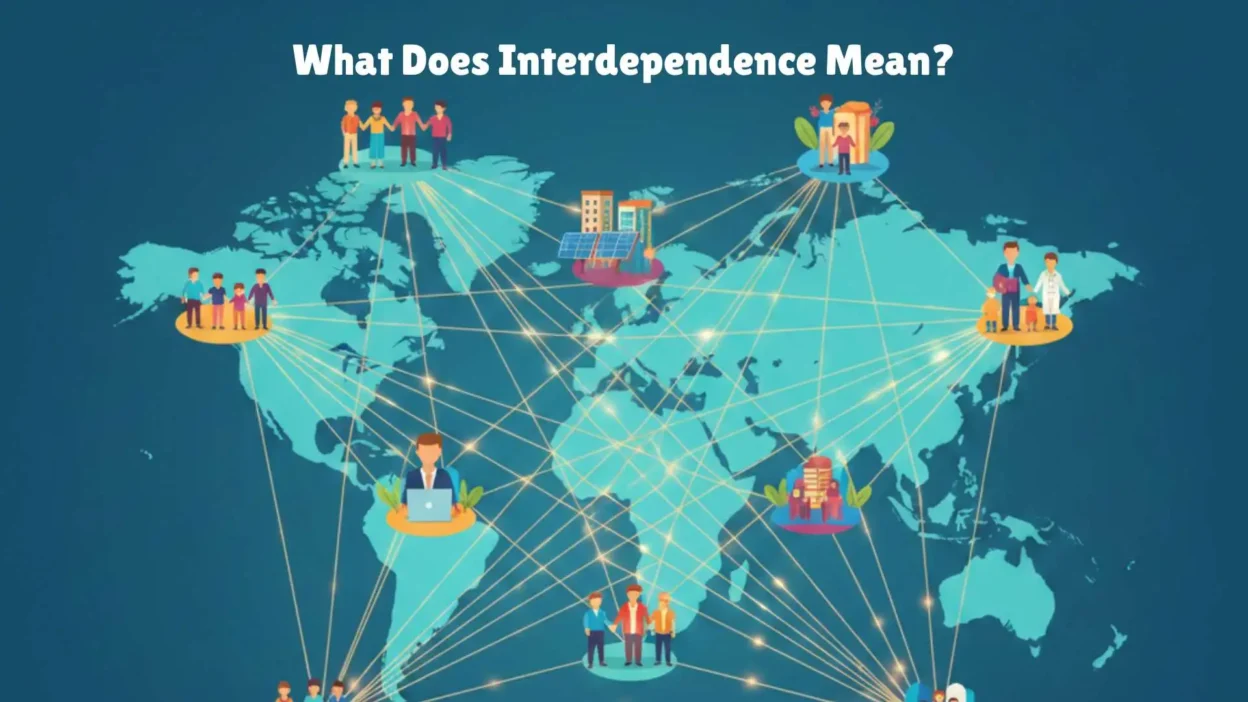
Interdependence is a concept that affects every corner of our lives, whether we notice it or not.
From the coffee you sip in the morning to global trade between nations, interdependence describes the mutual reliance between two or more parties.
It goes beyond simple dependence—where only one party relies on another—and highlights a dynamic where everyone contributes and benefits.
In this article, we’ll explore what interdependence means, its types, practical examples, benefits, risks, and how to foster healthy interdependent relationships.
Understanding Interdependence vs. Dependence
At first glance, dependence and interdependence may seem similar, but they have a crucial difference. Dependence occurs when one party relies solely on another without offering anything in return. In contrast, interdependence implies a reciprocal relationship, where each party contributes to and benefits from the interaction.
For example:
- Dependence: An employee relying entirely on their paycheck without contributing beyond their assigned role.
- Interdependence: A client-supplier relationship where both sides rely on each other for growth, profit, and survival.
Key points to understand:
- Mutual reliance forms the backbone of interdependence.
- It exists in personal, business, social, and global contexts.
- Recognizing interdependence helps improve collaboration and resource allocation.
Quotes about interdependence:
- “No man is an island; every man is a piece of the continent.” – John Donne
- “We cannot live only for ourselves. A thousand fibers connect us with our fellow men.” – Herman Melville
Types of Interdependence
Interdependence manifests in multiple spheres. Understanding its types helps illustrate how interconnected our world really is.
Economic Interdependence
Economic interdependence occurs when nations, businesses, or individuals rely on each other to produce, trade, and consume goods and services.
Examples:
- Countries trading electronics, oil, and agricultural products.
- Manufacturers relying on raw material suppliers.
- Businesses sharing supply chains to reduce costs.
Benefits:
- Increased efficiency and productivity.
- Reduced costs through specialization.
- Shared risk and improved market stability.
Examples of Economic Interdependence
| Party A | Party B | Dependency Type |
| USA | China | Electronics trade |
| Germany | France | Automotive parts supply |
| India | UAE | Oil import |
| Japan | South Korea | Semiconductor production |
| Brazil | Argentina | Agricultural goods |
Financial Interdependence
Financial interdependence involves reliance among financial institutions, businesses, and lenders. Banks loan money to companies, companies pay interest and fees, and both parties benefit from the relationship.
Examples:
- Investment banks supporting startups.
- Insurance companies providing risk coverage for businesses.
- Credit networks enabling global trade.
Risks:
- Over-reliance can lead to systemic financial crises.
- Failures in one institution can affect others worldwide.
Social and Community Interdependence
Beyond business, interdependence exists in communities and social networks. Individuals and groups rely on each other for skills, resources, and emotional support.
Examples:
- Neighborhoods sharing tools or knowledge.
- Local farmers cooperating to maximize harvest efficiency.
- Communities organizing aid during emergencies.
Benefits:
- Builds trust and cooperation.
- Encourages resource sharing and mutual assistance.
- Enhances resilience during crises.
Regional and National Interdependence
Regions and nations rely on each other for resources, trade, security, and environmental stability.
Examples:
- Countries sharing water or energy resources.
- Nations collaborating on cross-border infrastructure projects.
- Regional trade agreements promoting economic growth.
Key Insights:
- Interdependence fosters peace and collaboration.
- It can prevent conflict by encouraging negotiation over competition.
- Over-dependence on a single resource or nation may create vulnerabilities.
Key Factors in Interdependence
Interdependence is not accidental; several factors determine its strength and efficiency:
- Specialization: Parties focus on producing goods or services they excel at.
- Cooperation: Mutual effort to satisfy each other’s needs.
- Resource sharing: Distribution of tangible and intangible resources.
- Degree of interdependence: Measures intensity and reliance.
- Nature of the relationship: Can be transactional, strategic, or emotional.
Practical Tip: Fostering clear agreements and communication strengthens interdependent relationships and reduces conflict.
How Interdependence Works in Practice
Business Examples:
- Client-Supplier Relationships: A supplier delivers raw materials on time; the client ensures steady orders. Both prosper.
- Uber Franchise Example: Drivers rely on the company for rides and fares; the company depends on drivers to provide service; customers rely on both for transportation.
Economic Examples:
- Countries trading goods and services create mutual prosperity.
- Supply chains connect raw material producers, manufacturers, distributors, and retailers.
Social Examples:
- Community groups sharing resources during emergencies.
- Neighbors cooperating for safety, food, or childcare.
List of Actions Demonstrating Interdependence:
- Depend on / rely on / need
- Specialize / produce / supply
- Assist / cooperate / maintain
- Encourage / reach agreement
Benefits of Interdependence
The advantages of interdependence are numerous and measurable:
- Efficiency: Shared resources and specialization reduce waste.
- Prosperity: Mutual reliance increases economic and social wealth.
- Cooperation: Encourages partnerships in business, politics, and communities.
- Peace: Countries or regions dependent on each other are less likely to conflict.
- Survival: Shared resources ensure collective resilience.
Benefits of Interdependence
| Benefit | Explanation | Example |
| Efficiency | Optimal use of resources | Shared supply chain logistics |
| Prosperity | Economic growth and wealth generation | International trade agreements |
| Cooperation | Partnerships and collaboration | Community farming projects |
| Peace | Reduced likelihood of conflict | EU regional cooperation |
| Survival | Collective resource support | Mutual disaster relief efforts |
Challenges and Risks
Interdependence isn’t without pitfalls:
- Over-reliance: Excess dependence on a single partner can create vulnerability.
- Conflict: Misaligned expectations or unequal contributions may cause disputes.
- Economic risk: Financial crises can ripple across interdependent networks.
- Supply chain disruptions: Natural disasters or political conflicts can halt interconnected systems.
Example: The 2008 global financial crisis showed how financial interdependence can amplify systemic risk.
How to Foster Healthy Interdependence
Creating strong and sustainable interdependence requires effort and strategy:
- Encourage communication: Transparency reduces misunderstandings.
- Promote fair specialization: Everyone should contribute according to capability.
- Share resources responsibly: Avoid monopolies and hoarding.
- Establish agreements: Contracts or informal understandings clarify responsibilities.
- Use technology: Digital platforms can track shared resources and improve coordination.
Real World Scenarios and Case Studies
Case Study 1 | Global Trade
- US and China electronics trade illustrates mutual reliance. Both economies benefit from manufacturing, raw materials, and consumer demand.
Case Study 2 | Local Business Ecosystems
- Uber drivers, the company, and customers form an interdependent network. Drivers depend on riders, riders rely on the platform, and the company relies on both to generate profit.
Case Study 3 | Regional Interdependence
- European countries share water, energy, and transport infrastructure. Cross-border collaboration ensures efficiency and sustainability while reducing conflict.
FAQs
What is the difference between dependence and interdependence?
Dependence is one-sided reliance, while interdependence is mutual reliance where both parties contribute and benefit.
Can interdependence exist between individuals?
Yes. Friends, families, and colleagues often rely on each other for support, resources, or knowledge.
What are examples of economic interdependence?
International trade, supply chains, and partnerships between businesses are classic examples.
Why is interdependence important in global trade?
It fosters efficiency, prosperity, shared risk, and peaceful relations between nations.
How does specialization affect interdependence?
Specialization allows parties to focus on their strengths, making the system more efficient and mutually beneficial.
What are risks of interdependence?
Over-reliance, conflicts, supply chain disruptions, and financial crises are potential risks.
Conclusion
Interdependence is the invisible thread connecting people, businesses, regions, and nations. Recognizing and nurturing these mutual relationships can improve efficiency, prosperity, and peace. While it comes with challenges, thoughtful cooperation, specialization, and communication make interdependence a powerful tool for growth and survival. Understanding this concept encourages a more collaborative, resilient, and connected world.