
I still remember the first time I saw the word “heritage” in a social media caption. Someone wrote, “Proud of my cultural heritage.”
I paused for a moment—was it something historical, personal, traditional, or something else entirely?
The more I explored, the more I realized that “heritage” is one of those powerful words that carries history, identity, culture, and personal meaning all at once.
So if you’ve come across the term and wondered what it really means, you’re not alone—and you’re about to get the clearest, simplest explanation.
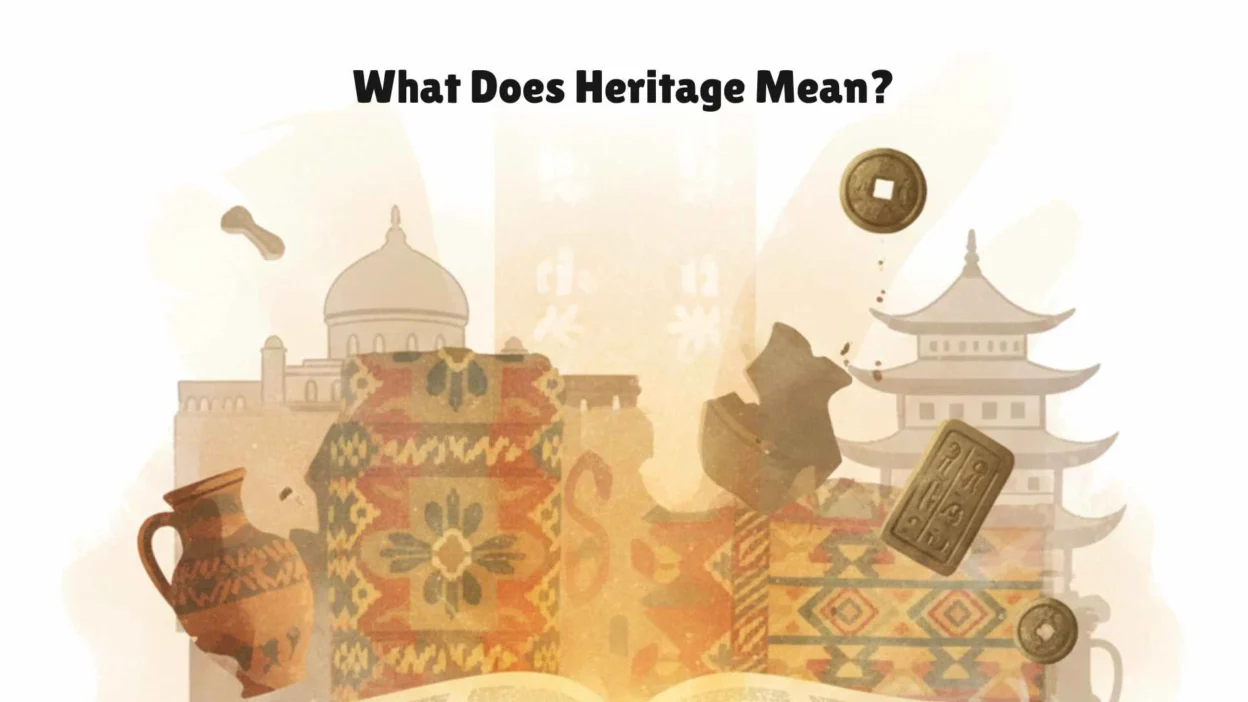
Quick Answer: Heritage means “the traditions, culture, values, history, and assets passed down from previous generations.” It’s a formal, meaningful word used to express identity, background, or ancestral traditions.
What Does Heritage Mean in Text?
In general usage—whether in texting, captions, essays, or bios—heritage refers to:
➡️ Everything you inherit culturally or historically from past generations, including traditions, customs, language, values, artifacts, and ancestry.
It does not have a slang meaning. Instead, it carries a formal and respectful tone, often used when talking about:
- culture
- ancestry
- family background
- national identity
- historical sites
- ethnic or regional traditions
Example Sentence:
“My heritage includes language, stories, and traditions passed down from my grandparents.”
In short:
Heritage = What you inherit culturally = Your roots, traditions, and history.
Where Is “Heritage” Commonly Used?
Because “heritage” is not slang but a meaningful cultural term, it appears in more formal or expressive contexts.
Here’s where you’ll see it most:
📱 Social Media Captions
– Instagram posts about culture, travel, traditions, food
– Heritage Day posts
– Family history photos
📚 School Essays & Reports
– History assignments
– Cultural identity essays
– Research projects
🏛️ Cultural Discussions
– Museums
– Documentaries
– Travel blogs
– Ancestry websites
🗣️ Daily Conversations
– Talking about your roots
– Discussing traditions
– Conversations about family history
⭐ Tone:
Heritage is formal, meaningful, and respectful—never flirty or overly casual.
Examples of “Heritage” in Conversation
Here are realistic, simple chat-style examples:
1.
A: where are your parents from?
B: pakistan! it’s a big part of my heritage 🇵🇰
2.
A: that festival looks amazing
B: yeah it’s part of our cultural heritage 😄
3.
A: why do you still speak that language at home?
B: it’s part of my family heritage
4.
A: loved your traditional dress!
B: thanks, it represents my heritage 🫶
5.
A: what’s this museum about?
B: it showcases our national heritage
6.
A: why do you cook that dish so often?
B: it’s an old recipe from my heritage 🍲
7.
A: you know a lot about history lol
B: i like learning about my heritage 😄
When to Use and When Not to Use “Heritage”
✅ When to Use “Heritage”
Use it when you’re talking about:
- Cultural or family identity
- Traditions passed through generations
- Historical sites or artifacts
- Festivals, language, art, or customs
- Background, ethnicity, or ancestry
- Meaningful personal or national history
❌ When Not to Use “Heritage”
Avoid using it when:
- You need slang, casual chat, or humor
- You’re in a simple conversation that doesn’t relate to culture
- You are texting in an urgent situation
- You’re writing in a strictly technical or unrelated context
Comparison Table
| Context | Example Phrase | Why It Works |
|---|---|---|
| Family Chat | “This dish is part of our heritage.” | Explains cultural or family background. |
| Social Media | “Celebrating my heritage today ✨” | Emotional & expressive. |
| School/Essay | “Heritage refers to traditions passed down through generations.” | Academic and formal. |
| Work/Professional | “This site preserves architectural heritage.” | Clear, respectful, professional. |
| Casual Text | “we learned about our cultural heritage today” | Informative but not slang. |
Similar Words or Alternatives
| Word | Meaning | When to Use |
|---|---|---|
| Tradition | Practices passed down in families or communities | When discussing repeated customs or rituals |
| Culture | Shared beliefs, behaviors, language, and lifestyle | When talking broadly about community identity |
| Legacy | What is left behind for future generations | When describing impact or inheritance |
| Ancestry | Family lineage or genealogical roots | When discussing family tree or origins |
| Roots | Informal way to say where you’re from | Casual conversations or personal identity |
| Background | General personal history or environment | Neutral or professional contexts |
FAQs About “Heritage”
❓ Is “heritage” a slang word?
No. It is a formal English word referring to cultural inheritance.
❓ Can “heritage” be used in texting?
Yes, but it keeps the same formal meaning.
❓ Is heritage the same as culture?
Not exactly.
Culture is what people practice now.
Heritage is what has been passed down from the past.
❓ Does heritage only refer to family?
No. It can be national, ethnic, historic, or personal.
❓ What are heritage sites?
Places protected for their historical or cultural importance.
❓ Can food or clothing be part of heritage?
Absolutely—traditional recipes and clothing often reflect heritage.
Conclusion
Your heritage is more than just history—it’s your story, your identity, your traditions, and everything that connects you to the generations before you. Whether it’s language, festivals, food, or family values, heritage shapes who you are and how you see the world. Understanding it helps you appreciate your past and express your identity with pride. So the next time you see the word “heritage,” you’ll know it carries depth, meaning, and cultural beauty.