
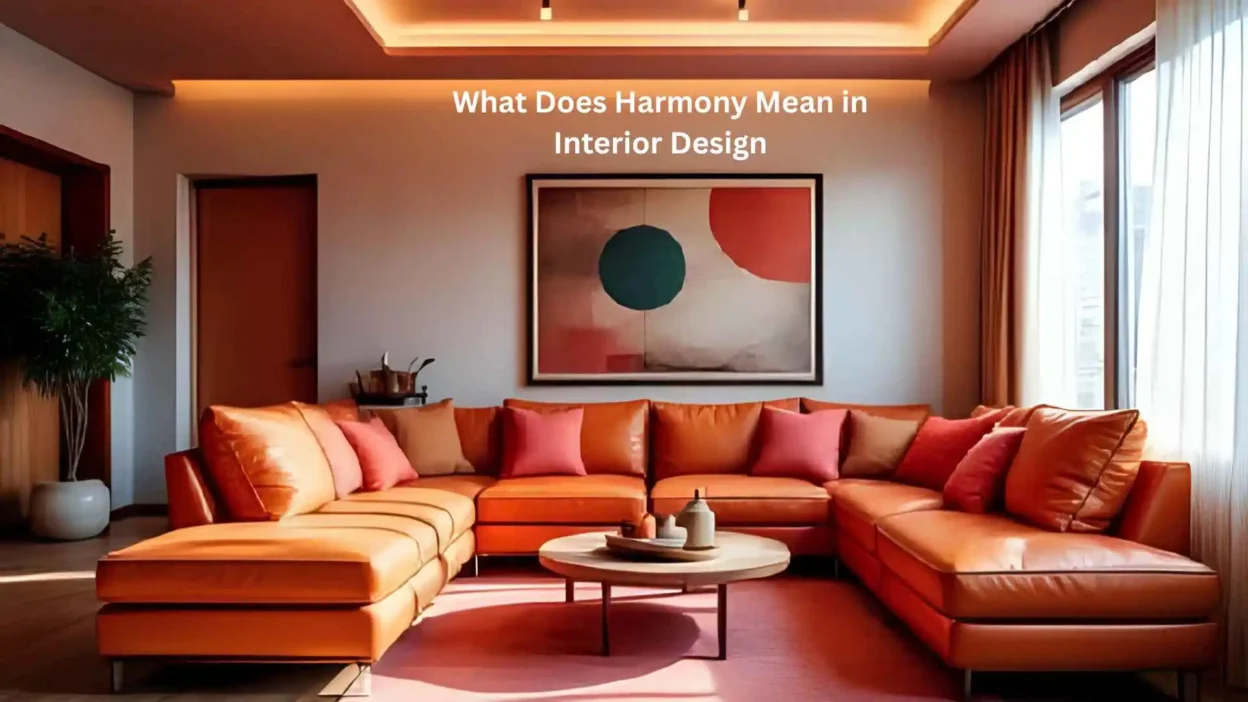
Have you ever walked into a room and instantly felt calm, like everything just “fits”? Maybe the colors, textures, and furniture all seem to belong together, creating a peaceful vibe. That feeling you experienced is the essence of harmony in interior design.
Quick Answer: In interior design, harmony means creating a balanced, visually pleasing space where all elements work together seamlessly. It’s a way to make a room feel comfortable, cohesive, and aesthetically satisfying.
🧠 What Does Harmony Mean in Interior Design?
Harmony in interior design is all about balance and unity. It ensures that every piece in a room — colors, furniture, patterns, and decor — complements each other rather than clashes.
Example:
If your living room has a soft beige sofa, warm wooden floors, and cream-colored curtains, the colors and textures create harmony because they work together naturally.
In short: Harmony = Balance + Unity = A room where all elements feel connected and pleasing.
📱 Where Is Harmony Commonly Used?
Harmony is a key principle in all interior design styles. It’s relevant whether you’re:
- 🏠 Home décor – living rooms, bedrooms, kitchens
- 🏢 Office spaces – making professional yet comfortable work areas
- 🛋 Hospitality design – hotels, cafés, and lounges
- 🖼 Virtual room planning apps – tools like Canva or Planner 5D
Tone: Harmony is universal — it works in formal, casual, and social-media-friendly design discussions.
💬 Examples of Harmony in Interior Design
Here are some real-life scenarios to illustrate harmony in a room:
- Living Room: Neutral walls + a matching rug + a wooden coffee table = cozy and balanced.
- Bedroom: Pastel bedding + soft lighting + minimalistic décor = relaxing harmony.
- Kitchen: Stainless steel appliances + white cabinets + wooden shelves = clean, unified style.
- Office: Matching desk and chair + coordinated wall colors = professional harmony.
- Outdoor Patio: Natural stone floor + green plants + neutral furniture = connected, serene feel.
🕓 When to Apply and When to Avoid Harmony Principles
✅ When to Use Harmony
- Designing a space for relaxation
- Creating a welcoming home
- Planning professional spaces that feel cohesive
- When you want visually balanced décor
❌ When Not to Prioritize Harmony
- Eclectic or experimental designs that intentionally clash
- Spaces where statement pieces are meant to stand out
- Art galleries or exhibitions with contrasting styles
Comparison Table:
| Context | Example Approach | Why It Works |
| Living Room | “Beige sofa + wooden floor + cream curtains” | Cozy & balanced |
| Office Space | “Matching desks & chairs + neutral walls” | Professional & harmonious |
| Modern Loft | “Mix textures carefully, but allow one bold color” | Adds personality while maintaining balance |
| Bedroom | “Soft bedding + pastel walls + minimalist décor” | Calm & relaxing |
🔄 Similar Interior Design Principles or Alternatives
| Principle | Meaning | When to Use |
| Balance | Equal distribution of visual weight | All types of rooms |
| Unity | Elements work together cohesively | Professional & home spaces |
| Contrast | Using opposite colors or textures | Statement rooms, artistic style |
| Rhythm | Repeating patterns, colors, or shapes | Long hallways or large rooms |
| Proportion | Proper size relationships between elements | Furniture arrangement |
❓ FAQs About Harmony in Interior Design
Q1: Is harmony the same as matching everything?
A: Not exactly. Harmony is about creating balance — elements don’t have to be identical, just complementary.
Q2: Can I have too much harmony?
A: Yes. Overdoing harmony can make a space feel bland. Mixing textures, patterns, and pops of color can keep it lively.
Q3: Is harmony important in small rooms?
A: Absolutely. Small rooms benefit from harmony because balanced elements make them feel larger and more comfortable.
Q4: How do I create harmony with color?
A: Use a consistent color palette (3–5 colors) and repeat them in furniture, decor, and walls to tie the room together.
Q5: Can I break harmony for a statement piece?
A: Yes. A bold artwork or accent furniture can stand out while maintaining overall harmony if used thoughtfully.
Harmony in interior design isn’t just about looks — it’s about creating a feeling. A harmonious room feels welcoming, organized, and aesthetically satisfying. Whether you’re redecorating your living room, designing an office, or styling a bedroom, keeping harmony in mind will help your spaces feel balanced and enjoyable.


