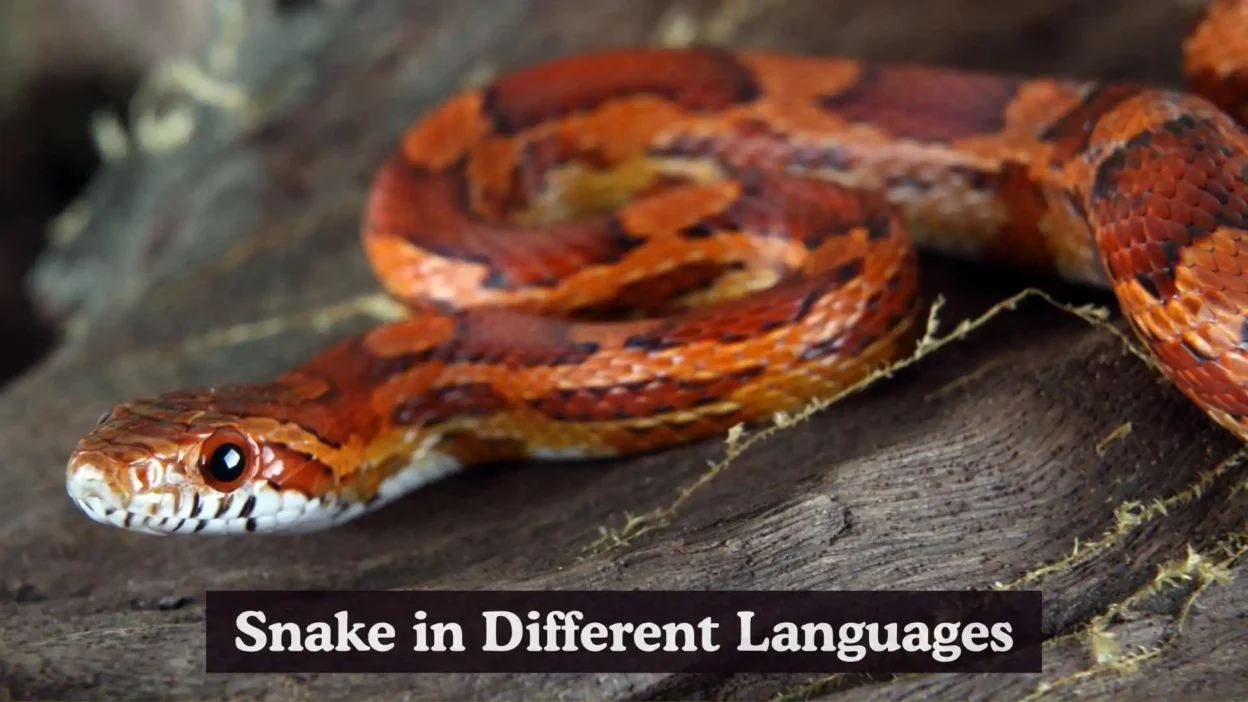
Have you ever wondered how people say “snake” around the world?
From the deserts of Africa to the jungles of Asia, every language has its own unique word for this fascinating creature.
In this article, we’ll explore Snake in Different Languages and uncover how cultures describe and view it.
Some see snakes as symbols of wisdom, others as creatures of mystery.
Get ready to discover how one slithering word changes beautifully across the globe!
🌍 How to Say “Snake” in 70 Different Languages
- English (🇺🇸) – Snake | Pronunciation: sneyk
Example: The snake slithered silently across the sand. - Spanish (🇪🇸) – Serpiente | Pronunciation: ser-pyen-teh
Example: La serpiente se deslizó por el jardín. - French (🇫🇷) – Serpent | Pronunciation: ser-pahn
Example: Le serpent se cache dans l’herbe. - German (🇩🇪) – Schlange | Pronunciation: shlang-uh
Example: Die Schlange bewegt sich schnell. - Italian (🇮🇹) – Serpente | Pronunciation: ser-pen-teh
Example: Il serpente strisciava tra le rocce. - Portuguese (🇵🇹) – Cobra | Pronunciation: koh-brah
Example: A cobra estava na floresta. - Russian (🇷🇺) – Змея (Zmeyá) | Pronunciation: zmeh-ya
Example: Змея ползла по песку. - Arabic (🇸🇦) – ثعبان (Thu‘ban) | Pronunciation: thoo-baan
Example: الثعبان يزحف ببطء. - Hindi (🇮🇳) – साँप (Saanp) | Pronunciation: saanp
Example: बगीचे में साँप है। - Bengali (🇧🇩) – সাপ (Sap) | Pronunciation: saap
Example: বাগানে সাপটি ছিল। - Urdu (🇵🇰) – سانپ (Saanp) | Pronunciation: saanp
Example: باغ میں سانپ ہے۔ - Japanese (🇯🇵) – 蛇 (Hebi) | Pronunciation: heh-bee
Example: 庭に蛇がいた。 - Chinese (Mandarin) (🇨🇳) – 蛇 (Shé) | Pronunciation: shuh
Example: 花园里有一条蛇。 - Korean (🇰🇷) – 뱀 (Baem) | Pronunciation: baem
Example: 뱀이 숲 속을 기어갔다. - Turkish (🇹🇷) – Yılan | Pronunciation: yi-lan
Example: Yılan sessizce süründü. - Greek (🇬🇷) – Φίδι (Fídi) | Pronunciation: fee-thee
Example: Το φίδι κινείται γρήγορα. - Dutch (🇳🇱) – Slang | Pronunciation: slahng
Example: De slang kroop door het gras. - Swedish (🇸🇪) – Orm | Pronunciation: orm
Example: Ormen slingrade genom skogen. - Finnish (🇫🇮) – Käärme | Pronunciation: kaa-rmeh
Example: Käärme liukui pitkin maata. - Polish (🇵🇱) – Wąż | Pronunciation: vongz
Example: Wąż pełzał w trawie. - Romanian (🇷🇴) – Șarpe | Pronunciation: shar-peh
Example: Șarpele se ascunde în iarba. - Hungarian (🇭🇺) – Kígyó | Pronunciation: kee-gyo
Example: A kígyó a fűben csúszott. - Czech (🇨🇿) – Had | Pronunciation: had
Example: Had se plazil po zahradě. - Slovak (🇸🇰) – Had | Pronunciation: had
Example: Had sa plazil po lese. - Thai (🇹🇭) – งู (Ngu) | Pronunciation: ngoo
Example: งูกำลังเลื้อยไป. - Vietnamese (🇻🇳) – Rắn | Pronunciation: ran
Example: Con rắn bò qua vườn. - Indonesian (🇮🇩) – Ular | Pronunciation: oo-lar
Example: Ular itu di taman. - Malay (🇲🇾) – Ular | Pronunciation: oo-lar
Example: Ada ular di taman. - Filipino (🇵🇭) – Ahas | Pronunciation: ah-has
Example: May ahas sa hardin. - Swahili (🇰🇪) – Nyoka | Pronunciation: nyo-ka
Example: Nyoka inanyonga taratibu. - Zulu (🇿🇦) – Inyoka | Pronunciation: in-yo-ka
Example: Inyoka ihamba ngesithuthuthu. - Hebrew (🇮🇱) – נחש (Nachash) | Pronunciation: na-khash
Example: הנחש זוחל על הקרקע. - Persian (🇮🇷) – مار (Mār) | Pronunciation: maar
Example: مار در باغ است. - Nepali (🇳🇵) – सर्प (Sarp) | Pronunciation: sarp
Example: बगैंचामा सर्प छ। - Sinhala (🇱🇰) – පන්සල (Pansa) | Pronunciation: pan-sa-la
Example: උයනේ පන්සලක් තිබුණි. - Tamil (🇮🇳) – பாம்பு (Paambu) | Pronunciation: paa-mboo
Example: பூங்காவில் பாம்பு உள்ளது. - Telugu (🇮🇳) – పాము (Paamu) | Pronunciation: paa-moo
Example: తోటలో పాము ఉంది. - Kannada (🇮🇳) – ಸರ್ಪ (Sarpa) | Pronunciation: sar-pa
Example: ಹಸಿವಿನ ಸರ್ಪ ಹೊಲದಲ್ಲಿ. - Malayalam (🇮🇳) – പാമ്പ് (Paamp) | Pronunciation: paamp
Example: പമ്പ് തോട്ടത്തിൽ കണ്ടു. - Burmese (🇲🇲) – န snake (Naga) | Pronunciation: na-ga
Example: ငါးနား蛇ကို မြင်တယ်။ - Khmer (🇰🇭) – ពស់ (Phous) | Pronunciation: poo-s
Example: ពស់កំពុងរអិល. - Lao (🇱🇦) – ງູ (Ngu) | Pronunciation: ngoo
Example: ງູກຳລັງລື້ນ. - Mongolian (🇲🇳) – Могой (Mogoi) | Pronunciation: mo-goi
Example: Могой гудамжаар мөлхөж байна. - Kazakh (🇰🇿) – Жылан (Zhylyan) | Pronunciation: zhy-lan
Example: Жылан бақта жүр. - Uzbek (🇺🇿) – Ilon | Pronunciation: ee-lon
Example: Ilon bog’da edi. - Tajik (🇹🇯) – Мара (Mara) | Pronunciation: ma-ra
Example: Мара дар боғ буд. - Georgian (🇬🇪) – გველი (Gveli) | Pronunciation: gveh-lee
Example: გველი ბაღშია. - Armenian (🇦🇲) – Վիշապ (Vishap) | Pronunciation: vi-shap
Example: Վիշապը այգում է։ - Ukrainian (🇺🇦) – Змія (Zmiya) | Pronunciation: zmee-ya
Example: Змія повзла по землі. - Serbian (🇷🇸) – Змија (Zmija) | Pronunciation: zmee-ya
Example: Змија се кроз траву. - Croatian (🇭🇷) – Zmija | Pronunciation: zmee-ya
Example: Zmija se skriva u travi. - Bosnian (🇧🇦) – Zmija | Pronunciation: zmee-ya
Example: Zmija se provukla kroz dvorište. - Albanian (🇦🇱) – Gjarpër | Pronunciation: ghar-per
Example: Gjarpri po shkon ngadalë. - Latvian (🇱🇻) – Čūska | Pronunciation: choos-ka
Example: Čūska slīd pa zemi. - Lithuanian (🇱🇹) – Gyvatė | Pronunciation: gee-va-teh
Example: Gyvatė slenka per žolę. - Estonian (🇪🇪) – Madu | Pronunciation: ma-doo
Example: Madu roomas aias. - Icelandic (🇮🇸) – Snákur | Pronunciation: snau-kur
Example: Snákurinn skríður í grasinu. - Irish (🇮🇪) – Nathair | Pronunciation: nah-hir
Example: Bhí an nathair sa pháirc. - Welsh (🏴) – Neidr | Pronunciation: nay-dr
Example: Roedd y neidr yn y glaswellt. - Hawaiian (🇺🇸) – Nāholo | Pronunciation: na-ho-lo
Example: Ke ana nei ka nāholo i ka pāka. - Samoan (🇼🇸) – Nati | Pronunciation: na-tee
Example: O le nati o loo savali i le togavao. - Maori (🇳🇿) – Nahā | Pronunciation: na-ha
Example: E peke ana te nahā i te papa. - Basque (🇪🇸) – Suge | Pronunciation: soo-ge
Example: Suge bat ikusi dut belarrean. - Catalan (🇪🇸) – Serp | Pronunciation: serp
Example: La serp s’amagava al jardí. - Esperanto (🌐) – Serpento | Pronunciation: ser-pen-to
Example: La serpento siblis tra la herbo.
🐍 Conclusion
No matter where you are in the world, the word “snake” slithers across languages with the same fascinating charm. Each language adds its own rhythm and personality to this mysterious creature. Knowing how to say “snake” in different tongues helps connect cultures and sparks curiosity about the natural world. Snakes may be feared or admired, but their universal name unites us in wonder.