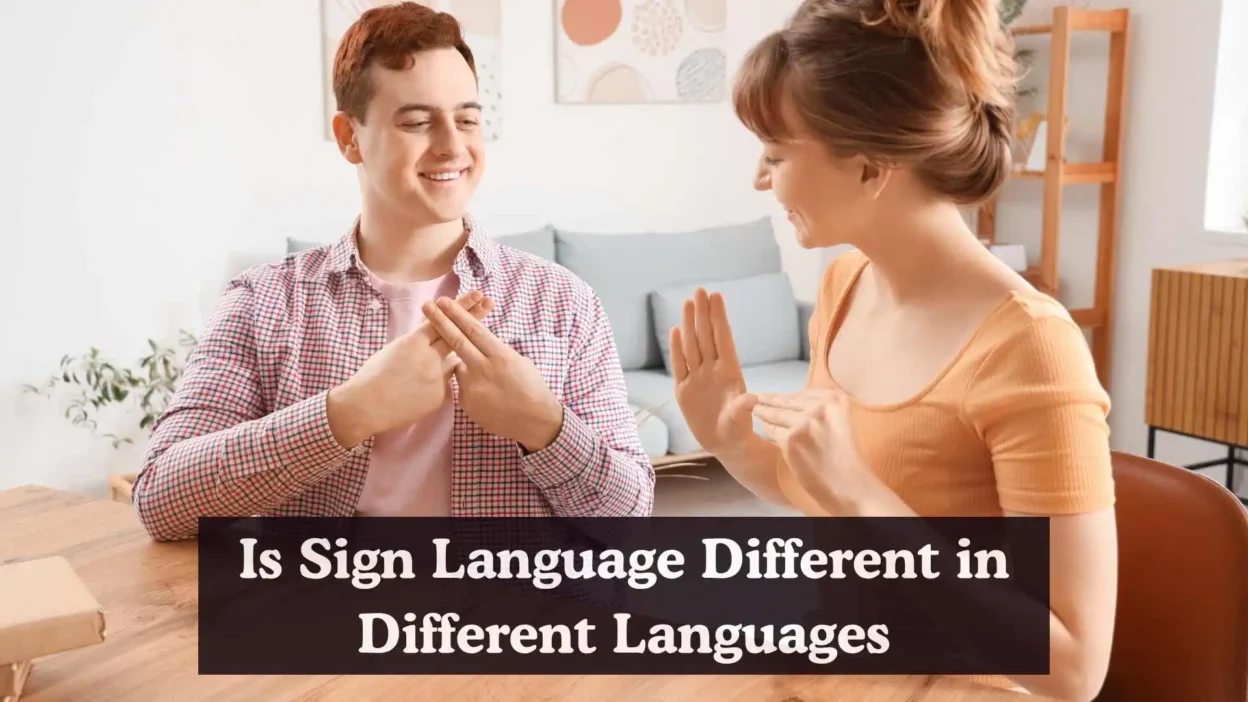
Have you ever wondered how people communicate using sign language across the world?
Maybe you’ve seen someone signing on TV, or met a Deaf friend and realized that sign language is far more than just hand movements.
While many assume sign language is universal, it’s actually different in each country and culture, with unique gestures, grammar, and expressions.
This guide is written for you — whether you’re a student, traveler, or just curious about communication. By the end, you’ll understand the diversity of sign languages worldwide, and discover how to say “hello,” “thank you,” or even “I love you” in 70 different sign languages.
Every gesture carries cultural meaning, and learning even a few can help you connect in a profoundly personal way.
🌍 Sign Language Around the World – 70 Countries and Variants
Here’s a list of 70 sign languages, including the country, language name, and notes about its unique style. While each sign language uses hand gestures, facial expressions, and body movements, they are not always mutually intelligible.
- American Sign Language (🇺🇸) – ASL | Used widely in the U.S. and parts of Canada
Example: “I love you” is signed with the thumb, index, and pinky raised. - British Sign Language (🇬🇧) – BSL | Distinct from ASL; fingerspelling is different
Example: Alphabet and greetings vary significantly from ASL. - Australian Sign Language (🇦🇺) – Auslan | Similar roots with BSL but unique gestures
Example: Regional signs exist within Australia’s states. - Canadian Sign Language (🇨🇦) – ASL / LSQ | French Canadian regions use LSQ (Langue des Signes Québécoise)
Example: Greetings differ between ASL users and LSQ users. - New Zealand Sign Language (🇳🇿) – NZSL | Combines influences from BSL and local culture
Example: Facial expressions are critical for grammar. - Irish Sign Language (🇮🇪) – ISL | Unique syntax and expressions
Example: “Thank you” uses a specific hand movement unlike BSL. - Scottish Sign Language (🏴) – SSL | Different from BSL
Example: Some alphabet letters are signed differently. - South African Sign Language (🇿🇦) – SASL | Used widely across South Africa with regional variations
Example: Localized gestures differ between urban and rural areas. - French Sign Language (🇫🇷) – LSF | Oldest documented European sign language
Example: Many gestures influenced ASL historically. - Belgian Sign Language (🇧🇪) – VGT / LSFB | Dutch-speaking and French-speaking regions differ
Example: LSFB uses handshapes that vary from VGT. - Spanish Sign Language (🇪🇸) – LSE | Used across Spain
Example: “Hello” and “Thank you” signs differ by region. - Mexican Sign Language (🇲🇽) – LSM | Independent from ASL
Example: Fingerspelling and word order vary significantly. - Brazilian Sign Language (🇧🇷) – Libras | Widely used in Brazil
Example: Signs for “love” and “friend” are culturally specific. - Argentine Sign Language (🇦🇷) – LSA | Regional differences in Buenos Aires vs. rural areas
Example: “Family” and “home” signs are unique. - Colombian Sign Language (🇨🇴) – LSC | Locally distinct from neighboring countries
Example: Fingerspelling alphabet slightly different from LSM. - Chilean Sign Language (🇨🇱) – LSCh | Influenced historically by French Sign Language
Example: “Food” and “drink” have unique gestures. - Peruvian Sign Language (🇵🇪) – LSPe | Regional variations exist
Example: Greetings and politeness markers differ culturally. - Venezuelan Sign Language (🇻🇪) – LSV | Influenced by Spanish Sign Language
Example: Specific handshapes reflect cultural idioms. - German Sign Language (🇩🇪) – DGS | Different from Swiss or Austrian sign languages
Example: “Good morning” is unique in DGS. - Austrian Sign Language (🇦🇹) – ÖGS | Influenced by DGS but independent grammar
Example: Verb placement differs from DGS. - Swiss Sign Language (🇨🇭) – DSGS / LSF-CH | Multiple variants exist
Example: French-speaking regions use LSF-CH. - Italian Sign Language (🇮🇹) – LIS | Used in Italy with regional differences
Example: Expressions for emotions differ from ASL or BSL. - Portuguese Sign Language (🇵🇹) – LGP | Recognized as an official language in Portugal
Example: Greetings and daily phrases have local gestures. - Norwegian Sign Language (🇳🇴) – NSL | Separate from Danish Sign Language
Example: Grammar uses facial expressions extensively. - Danish Sign Language (🇩🇰) – DSL | Different from NSL despite proximity
Example: Certain nouns have one-handed vs two-handed signs. - Swedish Sign Language (🇸🇪) – SSL | Different from Danish Sign Language
Example: Fingerspelling alphabet is distinct. - Finnish Sign Language (🇫🇮) – FinSL | Independent from Swedish Sign Language
Example: Directional verbs are heavily used. - Norwegian Sign Language (🇳🇴) – NSL | Already listed, key regional dialects exist
- Icelandic Sign Language (🇮🇸) – ISL | Small community, unique vocabulary
Example: Many gestures have local meaning. - Russian Sign Language (🇷🇺) – RSL | Widely used across Russia
Example: Polite forms differ depending on age. - Ukrainian Sign Language (🇺🇦) – USL | Independent from RSL
Example: Regional differences in fingerspelling. - Polish Sign Language (🇵🇱) – PJM | Uses one-handed alphabet differently than ASL
Example: Family terms have unique gestures. - Czech Sign Language (🇨🇿) – ČZJ | Distinct grammar
Example: “Home” is signed differently from PJM. - Slovak Sign Language (🇸🇰) – SVK | Similar roots to Czech but independent
Example: Directional verbs differ. - Hungarian Sign Language (🇭🇺) – HSL | Independent system
Example: Regional dialects in Budapest vs rural areas. - Romanian Sign Language (🇷🇴) – LSR | Recognized officially in Romania
Example: Expressions for school-related words differ. - Bulgarian Sign Language (🇧🇬) – BSL | Independent vocabulary
Example: Colors and numbers are signed differently than in ASL. - Serbian Sign Language (🇷🇸) – SSL | Regional differences exist
Example: Greetings and polite forms vary. - Croatian Sign Language (🇭🇷) – HZJ | Unique grammar
Example: Numbers 1–10 have distinct handshapes. - Bosnian Sign Language (🇧🇦) – BSL | Regional variations from Croatian Sign Language
Example: “Thank you” differs slightly. - Slovenian Sign Language (🇸🇮) – SZJ | Independent from neighboring sign languages
Example: Localized signs for food items. - Greek Sign Language (🇬🇷) – GSL | Widely used in Greece
Example: Emphasis is placed on facial expressions. - Turkish Sign Language (🇹🇷) – TİD | Unique from ASL or European sign languages
Example: Directional verbs are common. - Arabic Sign Language (🇸🇦) – ArSL | Different across Middle Eastern countries
Example: Egyptian SL differs from Saudi SL. - Hebrew Sign Language (🇮🇱) – ISL | Modern usage in Israel
Example: Numbers are signed differently than ASL. - Japanese Sign Language (🇯🇵) – JSL | Unique grammar and word order
Example: Politeness is expressed with body posture. - Korean Sign Language (🇰🇷) – KSL | Independent from JSL
Example: “Family” and “friend” have distinct gestures. - Chinese Sign Language (🇨🇳) – CSL | Multiple dialects across China
Example: Shanghai SL differs from Beijing SL. - Taiwanese Sign Language (🇹🇼) – TSL | Independent from CSL
Example: Local gestures differ significantly. - Thai Sign Language (🇹🇭) – TSL | Unique gestures for politeness
Example: Hand movements convey social hierarchy. - Vietnamese Sign Language (🇻🇳) – VSL | Distinct from other Asian SLs
Example: Regional gestures vary between north and south. - Indonesian Sign Language (🇮🇩) – BISINDO | Widely used in Indonesia
Example: Words for numbers differ from ASL. - Filipino Sign Language (🇵🇭) – FSL | Official language in the Philippines
Example: Greetings and names have local variants. - Malaysian Sign Language (🇲🇾) – BIM | Unique grammar
Example: Directional verbs common in daily use. - Swahili Sign Language (🇰🇪) – SSL | Independent from ASL
Example: Localized gestures for animals and nature. - Amharic Sign Language (🇪🇹) – ESL | Ethiopia’s national SL
Example: Greetings and family terms are local. - Somali Sign Language (🇸🇴) – SSL | Distinct gestures
Example: Numbers and colors signed uniquely. - Zulu Sign Language (🇿🇦) – ZSL | Region-specific gestures
Example: Cultural gestures for respect are included. - Hausa Sign Language (🇳🇬) – HSL | Unique grammar
Example: “Thank you” has localized hand movement. - Yoruba Sign Language (🇳🇬) – YSL | Regional variations exist
Example: Religious and cultural gestures included. - Hawaiian Sign Language (🇺🇸) – HSL | Localized to islands
Example: Greetings emphasize hand positioning and body posture. - Māori Sign Language (🇳🇿) – NZSL variant | Combines local language elements
Example: Cultural expressions included in greetings. - Samoan Sign Language (🇼🇸) – SSL | Island-specific gestures
Example: Social gestures for respect are key. - Tongan Sign Language (🇹🇴) – TSL | Community-based signs
Example: Family and kinship gestures important. - Basque Sign Language (🇪🇸) – LSE | Region-specific in Spain
Example: Local gestures for numbers and colors. - Catalan Sign Language (🇪🇸) – LSC | Distinct from Spanish SL
Example: Regional vocabulary differs. - Esperanto Sign Language (🌐) – LES | Created for international communication
Example: Used mainly by Esperanto community worldwide.
🤝 Conclusion
Sign language is as diverse as the world itself. While gestures and grammar vary across countries, the heart of communication remains universal: connection and understanding. By learning even a few signs, you bridge cultures and make friendships that words alone sometimes cannot. Every sign carries a story, history, and culture — making the world a more inclusive and beautiful place.